Welcome to the Companion Site
SAGE edge offers a robust online environment you can access anytime, anywhere, and features an impressive array of free tools and resources to keep you on the cutting edge of your learning experience.

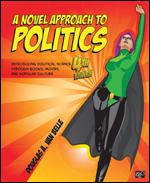
A Novel Approach to Politics isn’t like other textbooks. This is one that students want to read. With his new Fourth Edition, Douglas A. Van Belle continues to turn conventional wisdom on its head by using pop culture references—updated in every chapter—to illustrate key concepts and to cover recent political events. Students will appreciate the tie between George R.R. Martin’s Game of Thrones and the authoritarian executive as much as House of Cards and cross-cutting cleavages, not to mention World War Z and bureaucracy. Just so things don't get too crazy, student aids are still in there—this time with new learning objectives joining chapter summaries, bolded key terms, and discussion questions. The “Thinkers in Boxes" call out pivotal political philosophers, theorists, and assorted hipsters, while the “Gods of Geekdom” highlight how the work of notable figures in science and science fiction tie into key chapter concepts—keeping politics relevant and relatable.
Acknowledgements
We gratefully acknowledge Douglas Van Belle for writing an excellent text. Special thanks are also due to Wendy Johnson for developing the ancillaries on this site.
For instructors
Access resources that are only available to Faculty and Administrative Staff.
Want to explore the book further?